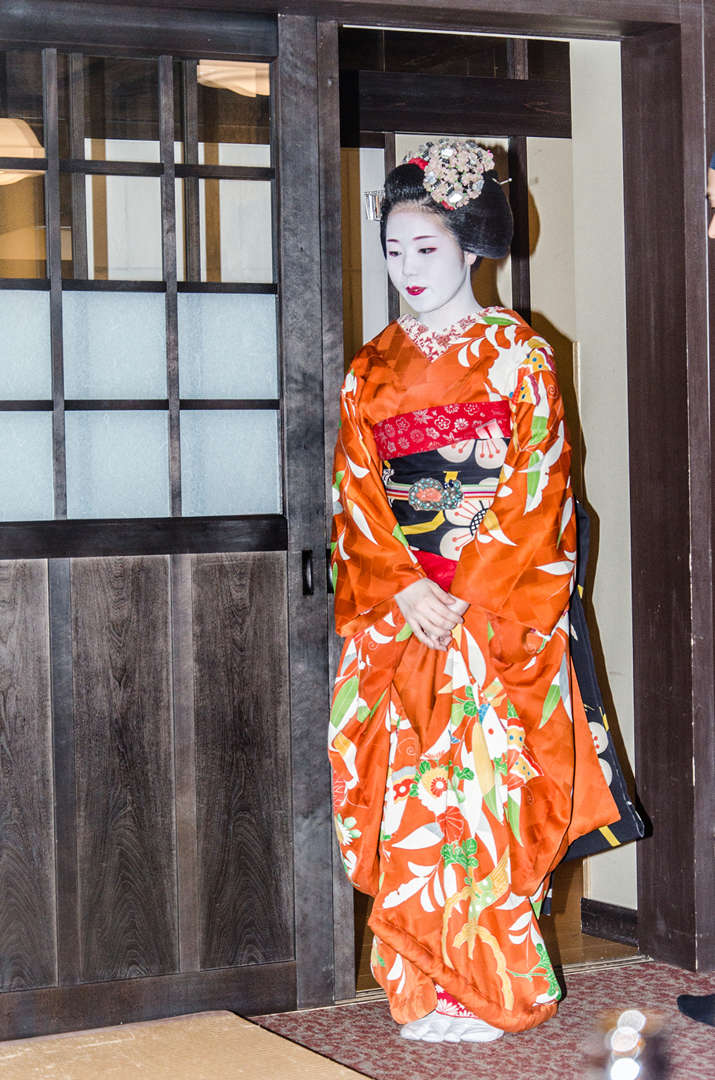
 There are few things more satisfying after months of work than writing the words The End – figuratively speaking of course. No novelist I know types the actual words. Not that ‘Undercover Geisha’ is anywhere near publication. The first draft may be complete, but months of work rewriting still lie ahead. Perhaps if I were a plotter I would need to do less rewriting, but before I send the manuscript to the editor I need to go through it at least four times – once for plot, a second time for character, a third for location and the last for tension and pace. That’s the easy bit.
Now it’s time for a deep breath. Next step is to send it to the editor. Several weeks of nervous waiting go by. It happens again and again, but each time, I hope that for once, when it pops up in my mailbox, things will be different. She will love it and approve. I read through the report and my heart sinks. For the next two weeks I stomp through the house demanding, ‘What does she know? Has she any idea how much work will be involved?’ Eventually I simmer down and gradually I begin to see she might have a point. A major rewrite follows. I have two editors, so I have to go through the whole sorry saga a second time. I have to admit, at the end of the process, I have a much better novel.
Now it’s time to send it to my half dozen or so beta readers – most are tried and tested regulars whose opinion I value, but some are new and each are valued for their individual skills. Whereas editors are concerned with the major overarching issues of plot, characterisation, tension and pace, my beta readers help more with the minutia. I have at least one American reader. I sell more novels in the US than here in Britain so it’s important that my British English can be understood by my American readers. I rarely change the word itself but try to ensure that its meaning is clear from the context. It can be a challenge to rewrite the sentence without labouring it to the point of tautology, but the last thing any writer needs is to stop the flow for the reader. I recently acted as a beta reader for a fellow crime writer. Though her series is set in 1920s upper class England and all the characters are British, she is American. I love her novels, but I was completely floored when one of the characters talked about flatware – never a good idea to make your reader stop and going scurrying to the dictionary or the internet to find out what they are talking about.
 One of my new beta readers will probably be my ‘expert’. Every novel demands a wide range of research, but there is nothing like a ‘man’ who knows from experience. For Murder in Morocco, the first of my Aunt Jessica series, Jessica is an historian who accompanies tour groups. Who better for my ‘expert’ beta reader than the historian who came with us on our wonderful holiday to Morocco? Not only could she ensure that Jessica’s role as accompanying historian was credible, she could check that all the information about Islamic art, architecture and history was correct. For Blood in Chocolate, my expert was someone who had worked in the British Embassy (which is where all the MI6 and MI5 meetings took place in my novel). My beta reader for Blood across the Divide was a fellow cruise lecturer who lives in Belfast and agreed to check over the manuscript (good job too as she discovered a couple of minor inaccuracies, easily corrected). Who better than a tour manager for a coach company to read my very first Fiona Mason novel, Blood on the Bulb Fields?
When I am finally happy that the manuscript is as good as I can make it, it goes to the copy editor and finally the proof-reader.
It’s a lengthy process but I owe it to myself, never mind my readers, to publish the best book I can. I’ve never met a writer who will tell you anything different. The number of novelists who never need to rewrite you can count on one hand, but even if they skip that first stage, they have editors to please and no matter how good you are at checking your own work, it’s a brave man who fails to have a professional proof reader cast an eye over the final manuscript.
I love to hear from my readers – old and new. It’s great to get an email from readers saying how much they enjoyed my novels obviously, but I really do appreciate those who take the trouble to let me know they’ve noticed something amiss – it could be a typo (the odd one or two always seems to slip through) or some detail I’ve got wrong. These days, with eBooks and digital print runs, it takes only a moment or two to correct mistakes. Funnily enough, it’s often those people who first write to point out my failings who end up being the most lasting friends.
Leave a Reply